Book Review: The Knights Hospitaller: A Military History of the Knights of St John by John C. Carr
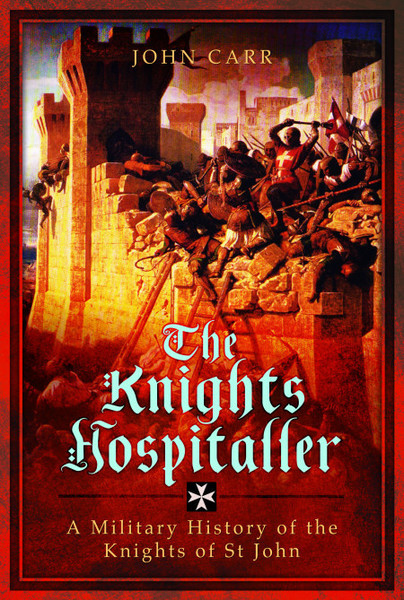
John C. Carr’s The Knights Hospitaller is a lively and wide-ranging history of one of the medieval world’s most remarkable organisations. Founded to care for sick and vulnerable pilgrims in Jerusalem, the Knights of St John gradually became an elite military order, fighting in some of the most important campaigns of the Crusades and later defending Rhodes and Malta. Carr follows their story across more than seven centuries, balancing battlefield action with the religious and charitable ideals that shaped the Order.
One of the book’s greatest strengths is the way it shows that the Hospitallers were never simply armoured warriors. Their original purpose was medical and charitable, and their Jerusalem hospital reportedly grew to around 1,000 beds, staffed by doctors who examined patients twice daily. The brothers cared for Christians, Muslims and Jews, following the belief that every poor or sick person should receive the best treatment available. This compassionate side of the Order makes its transformation into a formidable military force all the more fascinating.
For readers interested in combat, there is plenty to enjoy. Carr opens with the Battle of Arsuf in 1191, where the Hospitallers formed the rear of Richard the Lionheart’s army while enduring repeated attacks from Saladin’s forces. Their eventual charge helped turn the battle into a major Crusader victory. The chapters on Hattin, Acre, Rhodes, Malta and Lepanto also demonstrate how the Order adapted to changing styles of warfare, moving from mounted knights and castle garrisons to artillery, fortifications and naval combat.
The book also provides interesting details about training, armour and daily discipline. New members were warned that joining the Order was not a route to an easy life:
“When you would like to eat, it will be necessary to fast, and when you want to sleep, it will be necessary to keep watch.”
This quotation neatly captures the sacrifice expected of men who combined the lives of monks and professional soldiers.
Carr’s writing is clear and energetic, making complicated political and military events easy to follow. He does not ignore the Order’s failures, rivalries or occasional poor decisions, but the overall picture is one of extraordinary resilience. Again and again, the Hospitallers lost their homes, rebuilt their strength and continued their work.
Reading the book has also placed the Museum of the Order of St John firmly on my visit list. Anyone interested in the Hospitallers, medieval medicine or the military orders should also check it out: https://museumstjohn.org.uk/
Overall, this is an engaging and accessible account of faith, warfare, medicine and survival. It is highly recommended for readers interested in the Crusades, medieval combat, castles or naval history.
< BACK