Keeping Your HEMA Sword Clean and Maintained
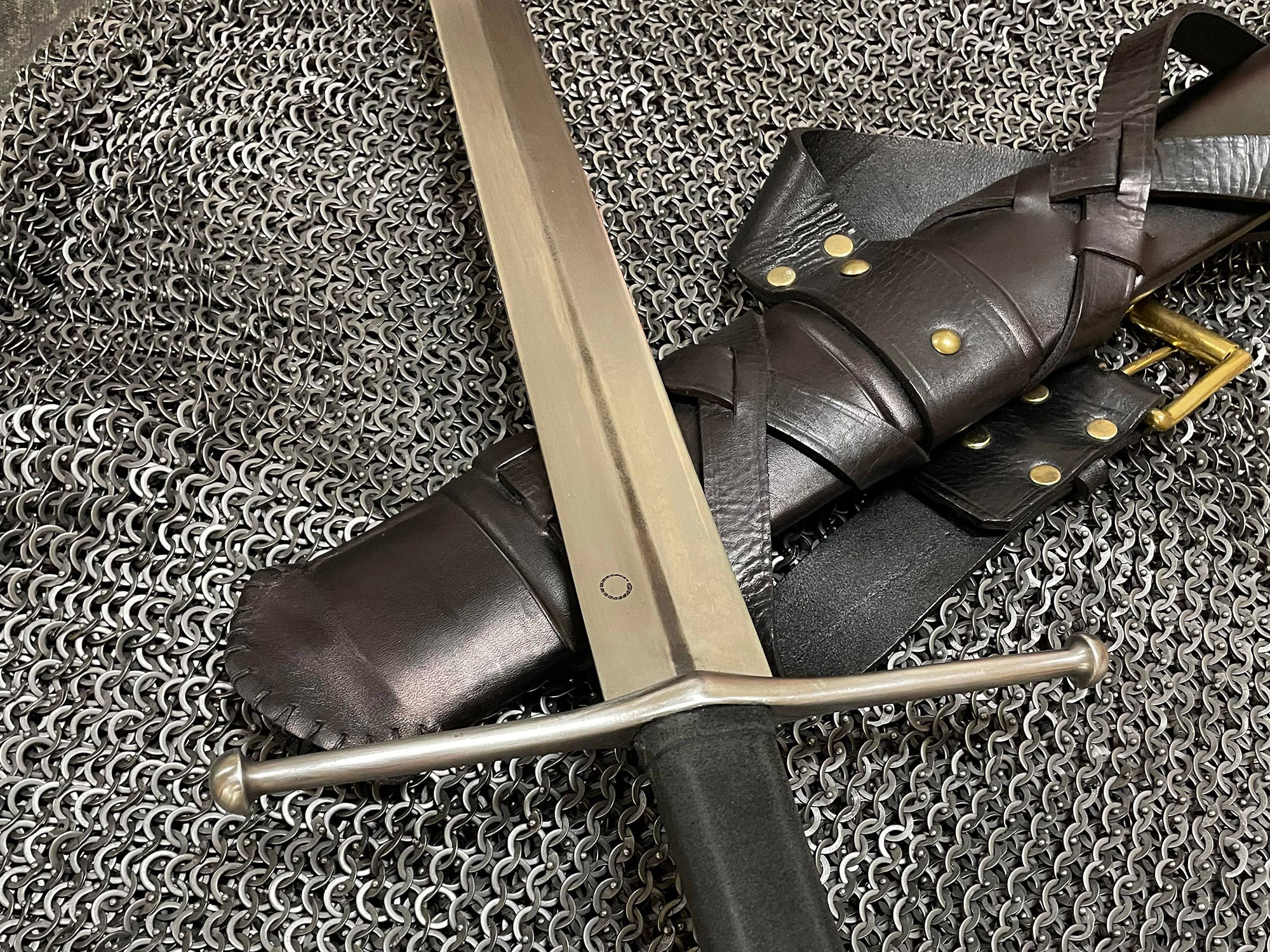
A HEMA sword is a tool, not an ornament. It takes impacts, sweat, humid store cupboards and long car journeys, and unlike a wall-hanger it needs to keep working safely week after week. The good news is that looking after it properly takes minutes, not hours — as long as you do it regularly rather than only when rust has already taken hold.
Here’s a straightforward routine, covering the blade, the edges, the hilt, and storage.
Why Steel Rusts So Fast on a Training Sword
HEMA blades — feders, longswords, sparring sabres and the rest — are made from tempered, non-stainless steel. That’s what gives them the springy resilience needed for sparring, but it also means they corrode easily. The single biggest cause of rust isn’t rain or a damp scabbard — it’s you. Sweat and skin oils carry salts that will start rusting bare steel within hours, and fingerprints near the guard, ricasso, or schilt are usually the first place surface rust appears.
A few habits make a big difference:
- Wipe the blade down after every session, removing all fingerprints and sweat, not just an obvious smear.
- Never pack a sword away wet or sweaty, and don’t store it in the same bag as your damp jacket or gambeson. A separate sword bag or sheath is worth having.
- Keep swords out of car boots. Exhaust fumes seep into boots and trunks more than people expect, and they’ll corrode a blade surprisingly quickly. If you can, keep the sword in the passenger compartment with you.
- Get it out of the bag as soon as you’re home. Leaving a sword zipped up in a damp bag overnight is exactly the environment rust likes.
- Don’t panic about grease on a brand-new sword. Many makers apply a protective coating for transport, and it’s normal to wipe this off on arrival before applying your own lighter coat.
Oil, Not WD-40
There’s a lot of conflicting advice floating around about what to put on a blade, and WD-40 comes up more than it should. It’s a water-displacing solvent rather than a proper protective oil, and while it can shift light surface rust in a pinch, it evaporates fairly quickly and leaves the steel under-protected soon after application — not what you want as your main defence between sessions.
A better choice is a proper multi-purpose maintenance oil such as Ballistol, which was originally developed for firearms care and works well on sword steel too — it displaces moisture, protects against corrosion, and doesn’t evaporate away in a day or two the way WD-40 does. Other reasonable options include gun oil, sewing machine oil, 3-in-1 oil, mineral oil (liquid paraffin), or traditional camellia oil (long used on Japanese blades). Whatever you choose, apply it sparingly with a soft cloth — a light, even film is what you’re after, not a visibly greasy coating. Too much oil is not only messy, it can migrate into a leather grip and start to rot it.
For swords that will sit on display or in storage rather than see regular use, a microcrystalline wax such as Renaissance Wax — developed by the British Museum for protecting museum artefacts — is worth having alongside your oil. Rub on thinly, buff off with a soft cloth, and it forms a harder, longer-lasting barrier than oil alone.
Aim to oil or wax your blade after every session, or at least once a week if it hasn’t been used, and more often if you train somewhere humid.
Dealing With Rust When It Does Appear
Even with good habits, some light surface rust will eventually show up — catch it early and it’s a five-minute job.
- Inspect regularly, in good light. Turn the blade to catch reflections. A patch that’s darker but still shiny is usually just surface oxidation and not urgent; if it’s dull or has texture to it, that’s rust and needs treating.
- For light surface rust, a fine synthetic abrasive pad (grey Scotch-Brite or similar) or 0000-grade steel wool, used with a little oil, will usually lift it without touching the temper of the steel. Always work in a single direction, along the blade towards the point — never scrub back and forth or across the blade, as this creates ugly cross-scratches that are hard to blend out.
- Garryflex blocks are worth adding to the kit bag. These are rubber blocks impregnated with silicon carbide grit, and the extra-fine (320-grit) grade is gentle enough to lift light rust and tarnish from a blade without leaving visible scratches, working much like a rust eraser but with finer control. Use them with a lubricant — water, paraffin, or your usual blade oil all work well — and stick to the same single-direction stroke along the blade. Avoid using WD-40 as the lubricant here, as it can break down the rubber compound the block is made from. They’re also handy for brightening hilt hardware and cleaning up grip fittings.
- For more stubborn spots, a fine automotive sanding sponge, or a dedicated blade rust remover/polish such as Autosol, will do the job. Step up in grit (fine, then medium if needed, then back to fine) rather than reaching straight for anything coarse.
- Never use power tools — no Dremels, angle grinders, or buffing wheels. It’s very easy to overheat the steel and ruin the temper, and a buffing wheel in particular is a genuinely dangerous way to injure yourself. All of this should be hand work, with patience.
If a blade has been badly neglected and has deep, entrenched rust or pitting, that’s a job for a proper restoration rather than a five-minute clean — and if the sword has any personal, competition, or historical significance, it’s worth getting advice before reaching for sandpaper at all. Dirt isn’t patina, but over-enthusiastic cleaning can strip away character and value just as easily as neglect can ruin a blade.
Checking and Dressing the Edge
Sparring puts real wear on an edge, and a damaged edge is a genuine safety issue for you, your partner, and their kit — burrs can shred a fencing jacket, and nicks can turn into cracks that eventually break the blade.
- Before and after use, carefully run a finger along both edges and the tip (never do this on a sharp blade), feeling for anything that isn’t smooth. Marking rough spots with a marker pen as you find them makes them easy to come back to.
- Burrs — the bits sticking proud of the edge — should be filed or sanded down first, back to the natural line of the edge, checking by feel as you go.
- Round nicks (compressed, “squished-in” damage) can be smoothed out with a fine file or stone until there’s no bulge either side.
- V-shaped nicks are more serious, since the point of the V is where a crack can start. Round these off carefully with a round file until no sharp corner remains — it’s fine to widen the nick slightly to fully round it out. If a V-nick is deeper than a couple of millimetres, get an instructor or experienced bladesmith to look at it before continuing to use the sword.
- Any crack, however small, means the sword should be retired immediately. Cracks don’t get better, and a cracked blade will eventually fail — usually in the worst possible moment.
Check guards and pommels the same way, especially the corners of square-section guards, which take a lot of edge-on impact.
Hilt, Grip, and General Wobble
Over time, grips compress under repeated impact and guards start to feel loose. On swords with a screwed pommel assembly, this is often fixable by loosening the retaining nut, hand-tightening the pommel until the guard sits firm again, then retightening the nut. If that doesn’t cure it, the grip itself may have compressed and need replacing — a worn grip is the most common cause of persistent “wobble” or a creaking feel in the hilt.
For hilt furniture:
- Steel parts can be cleaned and protected the same way as the blade (oil or wax).
- Brass fittings respond well to a brass cleaner like Brasso, followed by a coat of Renaissance Wax to slow future tarnishing.
- Leather grips and scabbards benefit from wax or a leather conditioner — keep oil away from leather grips, as excess oil will cause it to rot.
- Wooden grips can be treated with a wood oil such as tung or lemon oil to stop them drying and cracking.
Storage
A scabbard is for carrying a sword safely, not for long-term storage — untreated leather traps moisture against the blade and can actually encourage rust rather than prevent it. For anything you’re putting away for a while, a light coat of oil or a wax finish, wrapped in a clean dry cloth in a cool, dry place, will serve the blade far better than leaving it sheathed and forgotten.
The Short Version
- Wipe down after every session — sweat and fingerprints are the real enemy.
- Oil regularly with something like Ballistol rather than WD-40, and consider a wax like Renaissance Wax for anything on display.
- Deal with rust early, by hand, with fine abrasives — a Garryflex extra-fine block is a great addition to the kit — never power tools.
- Check edges before and after sparring, and retire anything with a crack.
- Keep leather and oil apart, and don’t rely on a scabbard for long-term storage.
None of this takes long once it’s a habit, and it’s a lot less work than a full restoration on a blade that’s been left to rust in the bottom of a kit bag.
< BACK