Book Review: Murder and Mayhem in Late Medieval England by Kathryn Warner
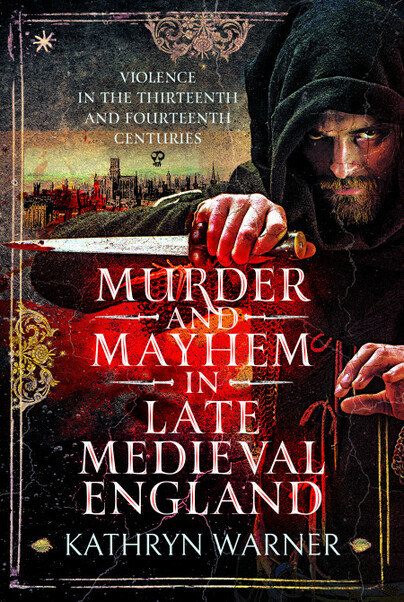
Murder and Mayhem in Late Medieval England covers a subject particularly close to my heart. I regularly give talks to local history groups on medieval crime, violence and punishment, so I approached Kathryn Warner’s book keen to see what new stories and evidence it might uncover. I wasn’t disappointed.
Warner draws extensively on coroners’ rolls, plea rolls, chancery records and the records of King’s Bench to explore violence in thirteenth- and fourteenth-century England. What makes the book so enjoyable is that these records allow her to get beyond kings, battles and great political events and instead introduce us to ordinary medieval people – and the arguments, accidents and crimes that sometimes brought their lives to a sudden end.
Some of the incidents are wonderfully mundane in their origins. A disagreement over a game of chess, for example, could escalate until two men ended up killing each other. It is these small human details that make the medieval world feel surprisingly immediate.
As someone with a particular interest in historical combat and weaponry, I also enjoyed the references to the weapons people actually carried and used. Warner’s records include the Irysshknyf or Irish knife, misericorde, baselard, falchion, poleaxe, axe and gisarme. For martial artists and arms historians, this is fascinating because these aren’t simply weapons in collections or illustrations – here we see them appearing in the messy reality of medieval life.
The material on archery is equally interesting. One case from 1280 records two brothers returning from a feast when an accidental fall from their horse resulted in an arrow piercing one brother through the armpit. We also discover that authorities tried to prevent Londoners shooting pigeons from buildings with bows and crossbows because of the danger posed to people below.
Despite the title, this isn’t simply a catalogue of gruesome deaths. Warner also explores the machinery of medieval justice – sheriffs, courts, imprisonment, pardons, punishment and the hue and cry – providing useful insight into how medieval communities attempted to control violence.
One line neatly sums up much of the evidence:
“Medieval people stabbed each other or hit each other over the head during quarrels with tedious regularity.”
Readable, well researched and full of stories that I suspect will find their way into some of my future talks, this is an excellent piece of social history. If your interests include medieval crime, weapons, combat or the everyday realities of life in medieval England, Murder and Mayhem is very easy to recommend.
< BACK