Book Review: Japanese Fighting Heroes: Warriors, Samurai and Ronins by Jamie Ryder
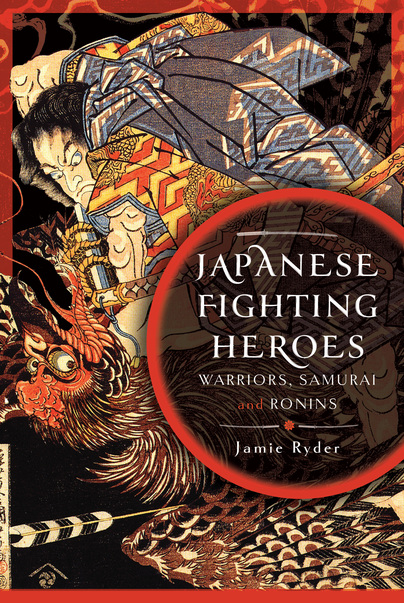
Japan’s martial history has produced some of the most recognisable warriors in the world, but separating the historical people from the legends surrounding them can be difficult. In Japanese Fighting Heroes, Jamie Ryder embraces both, producing an entertaining and highly accessible journey through Japanese history, folklore and popular culture.
The book is not simply a collection of samurai biographies. Ryder ranges widely, taking in warriors, ninja, swordsmiths, writers, artists and other figures who have helped shape our modern understanding of Japan. For anyone interested in Japanese martial culture, however, the chapters on Tomoe Gozen and Miyamoto Musashi are particular highlights.
Tomoe is presented through the traditions surrounding the Tale of the Heike, where she emerges as the archetypal female warrior: accomplished in archery and swordsmanship and described as a warrior “worth a thousand”. Ryder also explores the distinction between the onna-bugeisha, trained to defend the home, and onna-musha, who participated directly in battle. His dramatic reconstruction of Tomoe’s final fighting at Awazu, wielding her naginata from horseback, brings this martial world vividly to life.
For sword enthusiasts, though, Miyamoto Musashi inevitably takes centre stage. Ryder moves beyond the popular image of an unbeatable wandering swordsman to examine Musashi as martial artist, teacher and philosopher. His discussion of Niten Ichi-ryū and The Book of Five Rings is particularly interesting because swordsmanship becomes something greater than technique. Musashi’s approach incorporates timing, preparation, adaptability and continual practice – concepts that remain immediately recognisable to martial artists today. Ryder neatly describes Five Rings as Musashi’s “ultimate expression of how the warrior balances philosophy with wielding the sword.”
There is also fascinating material on the sword itself. The chapter examining the legendary swordsmiths Masamune and Muramasa is an enjoyable exploration of craftsmanship, reputation and mythology. Ryder is particularly good at showing how genuine sword-making traditions became intertwined with later stories of exceptional or even cursed blades.
A quotation from the Musashi chapter sums up one of the book’s recurring themes particularly well:
“a trooper is like a regular carpenter. A regular carpenter keeps his tools sharpened, makes his own auxiliary tools and transports them all in his toolbox.”
That emphasis on preparation, practice and mastery makes Japanese Fighting Heroes more than a catalogue of colourful characters. It is an engaging introduction to the people and stories behind Japanese martial culture and an especially enjoyable read for anyone with an interest in samurai, Japanese swordsmanship and the enduring mythology of the sword.
< BACK