Book review: Conspiracy and Murder in the Late Roman Empire by Timothy Venning
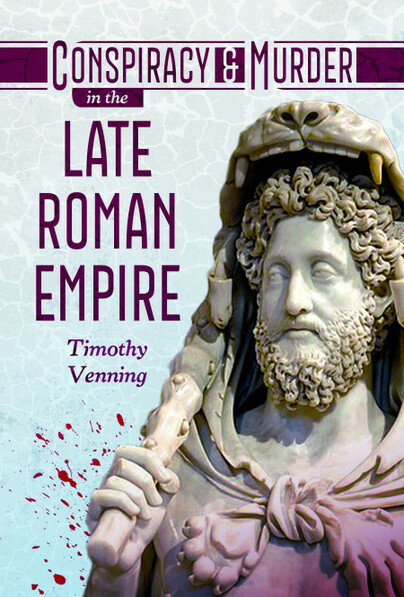
The Roman Empire was built on military strength, political ambition and, frequently, the ruthless elimination of rivals. In Conspiracy and Murder in the Late Roman Empire, Timothy Venning delivers a fascinating examination of the plots, assassinations and suspicious deaths that shaped the fortunes of Rome’s emperors.
What makes this book particularly engaging is Venning’s willingness to question the accepted historical narrative. Rather than simply repeating accounts handed down by ancient historians, he explores competing explanations, political motivations and the possibility that some familiar stories were deliberately distorted.
The book covers an impressive collection of imperial intrigues, from Hadrian’s controversial succession and the turbulent reign of Commodus to Constantine’s family tragedies, Julian the Apostate’s mysterious death and the political manoeuvring that contributed to the Western Empire’s decline.
For anyone interested in historical combat and swordsmanship, several episodes are particularly compelling.
One memorable example concerns the assassination of Avidius Cassius in AD 175. Venning recounts the account of a mounted centurion named Antonius attacking Cassius with his sword, almost severing his head before another soldier completed the killing. It is a brutal reminder that Roman political disputes could be settled through remarkably direct violence.
Another fascinating section examines the death of Emperor Julian during his Persian campaign in AD 363. Here, military tactics, close-quarter fighting and battlefield confusion combine with the enduring mystery surrounding the identity of the man who delivered the fatal wound.
Venning observes that Julian neglected to wear his metal cuirass despite:
“the risks of fighting at close quarters”
It is a short but telling observation. Even an experienced military commander could make a seemingly minor decision that proved fatal.
What I particularly enjoyed was the relationship between military power and political survival. Roman emperors depended upon soldiers for their authority, yet those same soldiers could become their executioners. The distinction between battlefield violence, assassination and political necessity was often remarkably thin.
Venning’s detailed approach rewards attentive reading, particularly when he weighs conflicting accounts and questions the motives of ancient chroniclers. This is not simply a catalogue of murders; it is an exploration of how power operated in an empire where loyalty could change overnight.
Overall, this is an absorbing and thought-provoking book that I would happily recommend to enthusiasts of Roman history, ancient warfare and historical martial arts. It demonstrates that the most dangerous weapon in imperial Rome was not always the sword itself, but the ambition of the person wielding it.
< BACK