Book Review: Somerled, Lord of the Isles: The Warrior Who Redefined Western Scotland
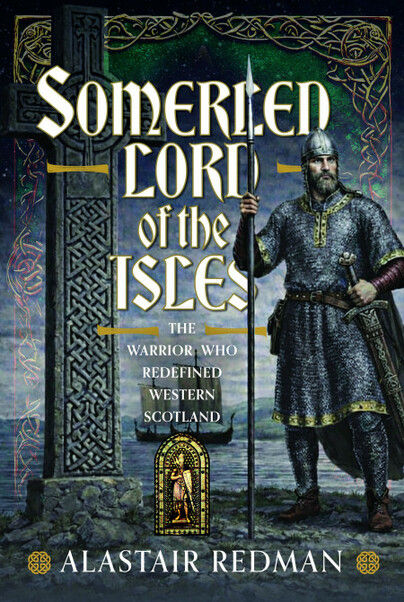
Alastair Redman’s Somerled, Lord of the Isles is an enjoyable and wide-ranging account of one of medieval Scotland’s most important, yet still surprisingly overlooked, leaders. Somerled emerges as far more than a fierce warrior. He was also a skilled politician, naval commander and kingdom-builder who brought Norse and Gaelic traditions together across the western Highlands and Islands.
The book’s greatest strength is the way it places Somerled within the landscape that shaped him. The sea is never simply scenery: it is a road, a defensive barrier, a source of wealth and the foundation of political power. Redman explains how control of islands such as Islay, Mull and Skye meant control of trade routes, military movement and communication. This gives the reader a vivid sense of why naval strength mattered so much in the twelfth-century Hebrides.
Chapter 16, “Warfare and Diplomacy in Somerled’s Realm”, is particularly interesting. It explores the weapons, training and tactics of Somerled’s warriors, including sword, axe and spear fighting, shield-wall formations and combat aboard birlinns. The details of shipboard training are especially memorable: warriors practised keeping their balance on unstable decks, leaping between vessels, fighting in confined spaces and responding quickly to commands. Navigation, rowing and knowledge of tides and wind were as important as personal bravery. The chapter shows that Somerled’s forces were trained for a demanding form of warfare requiring discipline, teamwork and adaptability.
Just as importantly, Redman shows that Somerled understood when not to fight. Marriage alliances, negotiated settlements and carefully chosen loyalties helped him survive between the competing ambitions of Norway and the Scottish Crown. As the book neatly observes:
“One cannot reign just from the top.”
Somerled needed the loyalty of clan leaders, fighting men and communities throughout his realm.
The later chapters broaden the story through archaeology, religion, culture, strongholds and the rise of the Lords of the Isles. Finlaggan, Iona and the maritime remains of the Hebrides help connect the legendary figure to a real historical world.
Overall, this is an accessible introduction to a fascinating ruler. Readers interested in medieval warfare, Scottish history, clan culture or naval power will find plenty to enjoy. Redman presents Somerled as a warrior, diplomat and visionary whose influence endured for centuries, shaping the identity and independence of western Scotland.
< BACK