Book Review: Trailblazing Medieval Women by Ashley Sarah Firth
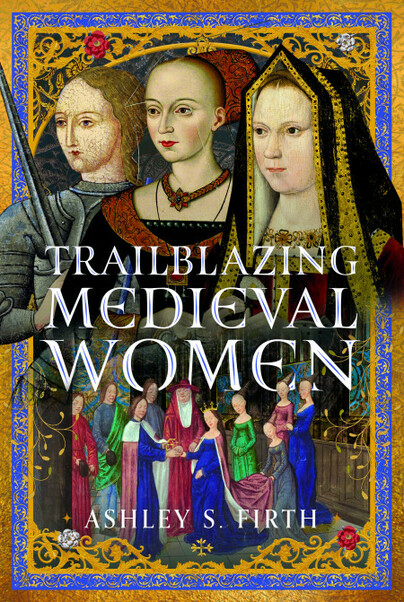
Ashley Sarah Firth’s Trailblazing Medieval Women is a lively and highly readable collection of stories about women who refused to remain in the background of medieval history. Instead of presenting the Middle Ages as a world shaped entirely by kings, knights and churchmen, Firth brings forward the queens, rulers, warriors and writers who influenced politics, warfare, literature and the future of nations.
The book is neatly divided into four sections: women who ruled, women who fought, women who wrote, and women connected with the Wars of the Roses. This gives the book plenty of variety. Familiar figures such as Eleanor of Aquitaine and Joan of Arc appear alongside women who may be less well known to general readers, including Sikelgaita, Matilda of Tuscany and Anna Comnena.
One of the most interesting chapters concerns Æthelflæd, Lady of the Mercians. Firth shows how she helped resist Viking expansion, strengthened towns and fortifications, and played a major role in the eventual creation of a united England. She was not simply the daughter of Alfred the Great or the sister of Edward the Elder, but an effective ruler and military strategist in her own right. The account of defenders at Chester throwing beehives down upon attacking Norsemen is especially memorable and shows how colourful medieval warfare could be.
The book is equally strong when exploring women whose reputations have been shaped unfairly. Isabella of France and Margaret of Anjou were both labelled “she-wolves”, while Empress Matilda was criticised for displaying the same determination and authority admired in male rulers. Firth carefully explains how medieval chroniclers often judged powerful women by different standards, without making the book feel heavy or overly academic.
A quote introducing Æthelflæd captures the spirit of the whole collection:
“You were a mighty queen and a king who won victories.”
— Henry of Huntingdon
Firth writes clearly and with enthusiasm, making complicated family relationships and political struggles easy to follow. Each chapter works as an engaging individual biography, while together they reveal how often women exercised real power despite the restrictions placed upon them.
Trailblazing Medieval Women is an enjoyable and rewarding read for anyone interested in medieval history, warfare, royal politics or overlooked historical figures. It succeeds in restoring these remarkable women to the centre of the stories they helped create.
< BACK