Description
What is the karambit?
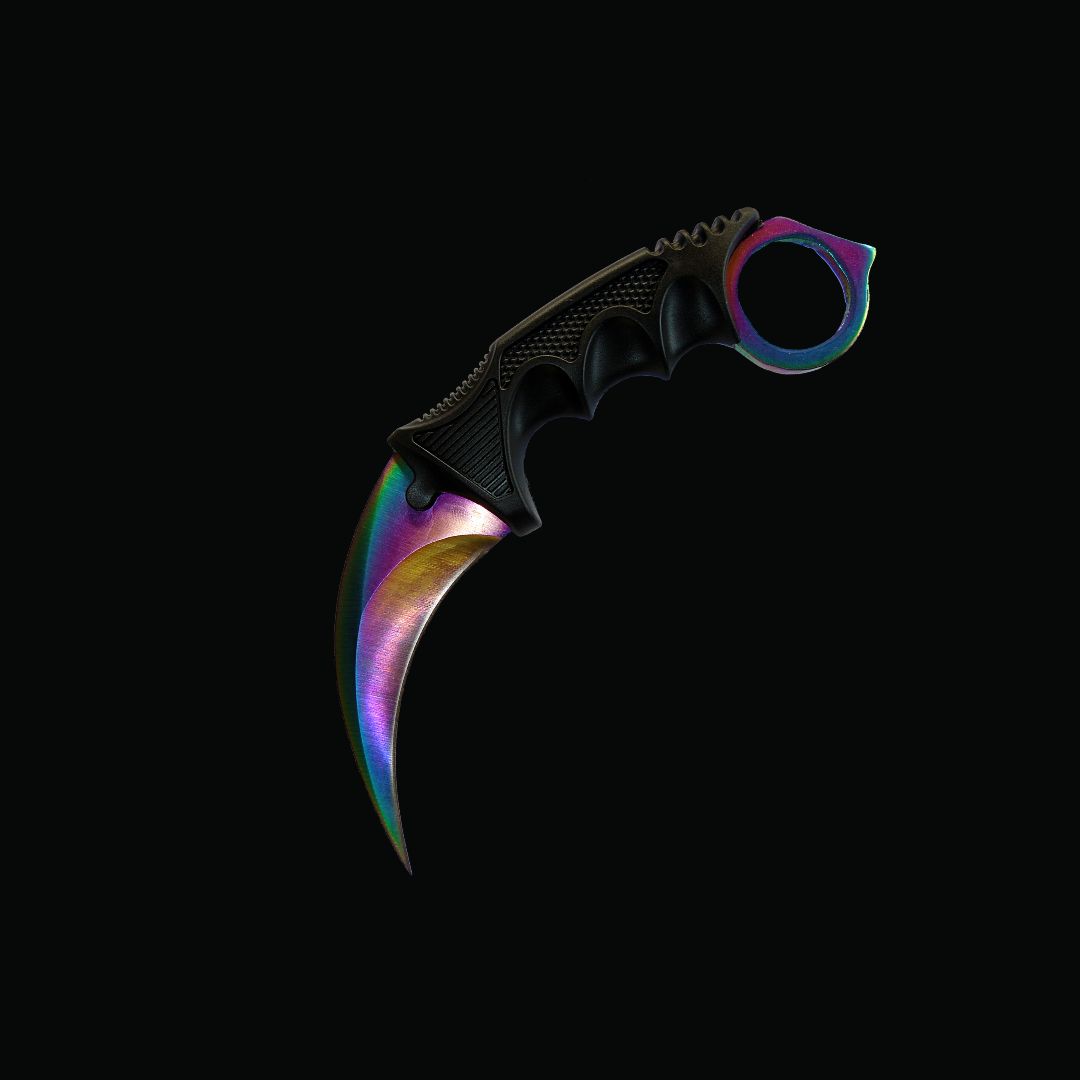
The karambit is a short, curved blade from Southeast Asia. It’s most closely tied to the Minangkabau people of West Sumatra, and its shape is said to copy a tiger’s claw. It began as a farming tool and later became a weapon carried across Indonesia, Malaysia and the Philippines. Traditional karambits are usually sharpened on both the inside and outside of the curve.
Its trademark is the finger ring. The ring keeps the blade in your hand under pressure, and it also works as a striking tool in its own right. The spinning and flicking that look so flashy online have real jobs to do: they extend your reach, draw an opponent’s attention and help you get the blade into play.
It isn’t an all-rounder like a conventional combat knife. The karambit’s reach is short and its blade is curved, so a fencing-style approach doesn’t suit it. What it gives up in range it makes up for at close quarters, where it’s devastating. The best way to think of it is as an extension of close-range striking and control, a bit like dirty boxing with a claw in your hand.
What you’ll learn
- Grips, blade retention, and using the finger ring safely, including as a striking tool
- Close-range entries and how to control your opponent’s position
- Trapping, off-balancing and manipulation
- Cutting applications that come out of striking and control
- The practical side of spins and flicks: reach, distraction and deployment
- Partner drills that build flow and timing
No experience needed. If you box, grapple, or train in HEMA, Eskrima or Silat, you’ll find a lot that feels familiar.
Your instructor
We’re delighted to welcome Paul Murphy, known to most people as “Vyke”, from Hornets in Gillingham.
Paul boxed throughout his teens while also training in judo, so he has a solid grounding in both striking and grappling. For the past 14 years he has trained in Guba Doce Pares Eskrima, where he focuses on edged weapons, close-range combatives and practical self-defence. That makes him the ideal guide to a weapon built for fighting up close.
Equipment: get your trainer before the day
Training knives only. Live blades are not allowed.
We recommend the Cold Steel Santoprene Karambit Trainer Knife
- Made from Santoprene, a tough rubber, and designed to look realistic for solo practice, training drills, disarm drills and demonstrations
- 9⅛” (23.2 cm) overall, with a 4″ (10.2 cm) blade
- Weighs 3.2 oz (90.7 g)
Order early so it arrives in time for the workshop.
What to bring
Comfortable clothes you can move in, trainers, water and your karambit trainer.
Places are limited. Book now to secure your spot.
Location: St Dunstan’s Church Hall, Canterbury
Date and Time: 9
th May 2027 – 1pm to 4pm
Cost: £30