Fighting Without Killing: The Arms and Armour of Jousts of Peace
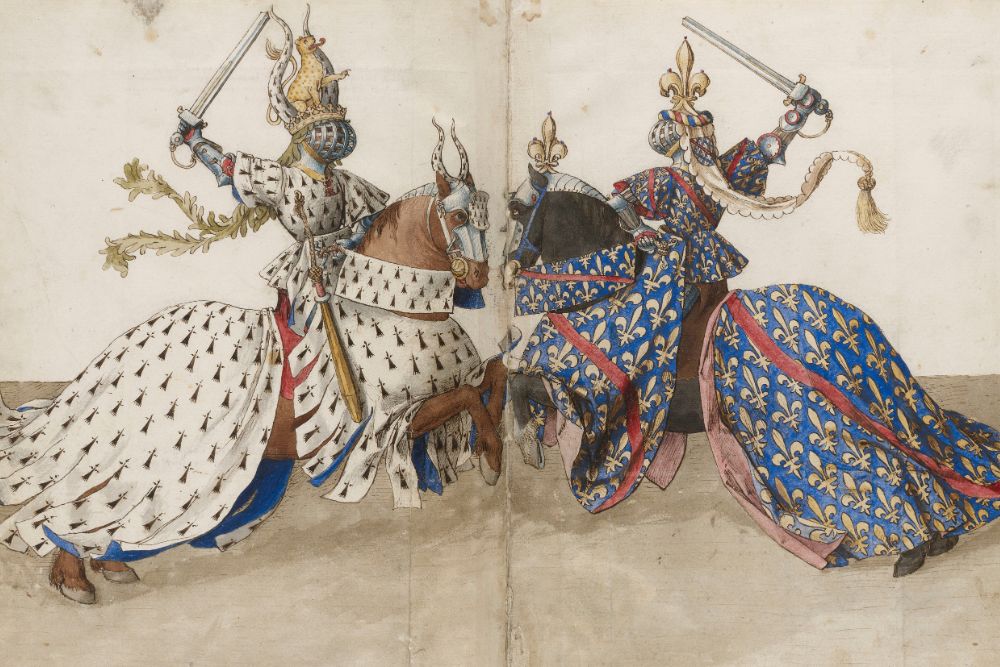
This article arose after my last trip to Munich where I found a helm labelled as a helm for the Joust of Peace. I then found a similar helm in the Kaiserberg Museum in Nuremberg. Pictures below. Reading the text and researching this, it is amazing to me how this is very much like our BalloonFecht games we play from time to time. Yes it appears BalloonFecht is historically accurate….
Jousts of Peace
From the late Middle Ages onwards, many tournaments were organised as jousts of peace. These were formal, non-lethal competitions governed by strict rules and overseen by officials. Unlike earlier martial games or battlefield training, jousts of peace were not intended to injure or kill. Instead, they focused on controlled displays of horsemanship, strength, and technical skill. Victory was achieved by striking specific targets, breaking weapons in a prescribed manner, or dislodging an opponent’s crest or helmet decoration.
Because safety was a central concern, jousts of peace required specially designed weapons and armour that could withstand repeated heavy impacts while reducing the risk of fatal injury. The equipment described below was developed specifically for these tournaments, balancing protection, spectacle, and heraldic display.
Tournaments and Their Special Equipment
In the late Middle Ages, tournaments were among the most popular public spectacles of noble life. They were not battles of war, but carefully organised sporting events designed to demonstrate skill, strength, and social status. The equipment used in these events differed significantly from that of the battlefield, as it had to absorb powerful blows while keeping participants alive and able to compete.
This specialised equipment was primarily used in mounted jousting and in tournaments fought on foot, where competitors faced one another with swords or wooden maces. In many jousts of peace, the objective was not to injure an opponent but to strike the helmet, break a weapon on impact, or knock off a crest. These goals directly shaped the design of weapons and armour.
Weapons Designed for Safety and Spectacle
Tournament weapons were made to appear formidable while limiting their lethality. Swords were forged from steel but lacked a sharp edge or pointed tip. A metal ring attached to the pommel allowed the sword to be tied to the armour, preventing it from being dropped during combat. These swords were extremely heavy, placing emphasis on strength and endurance rather than cutting ability.
The mace, another common tournament weapon, was made of wood and measured approximately 80 centimetres in length. It widened from the hilt towards the striking end and had a polygonal cross-section designed to deliver powerful but controlled blows. The guard consisted of either a flat iron disc or a thickened knop at the hilt, while the pommel was spherical. The force of these impacts required armour to be specially adapted for tournament use.
A New Kind of Helmet for Tournaments
Earlier helmets were strong enough to withstand blows, but because they fitted tightly to the head, they often transmitted dangerous force to the wearer. For jousts of peace, a new type of helmet was developed: the large, spherical tournament helmet, also known as the club helmet.
This helmet rested on the shoulders and chest rather than on the head itself, leaving space between the helmet and the skull to reduce the impact of blows. The traditional visor or eye slit was replaced by a steel mesh, offering protection while maintaining visibility. Some helmets included an additional layer of wire mesh for further safety.
A thickly padded coif was worn beneath the helmet to absorb shock. At the top of the helmet, a small metal pin or tube allowed a decorative crest to be attached, an important feature in tournaments where identity and heraldic display were central to the event.
How Tournament Helmets Were Made
Tournament helmets were produced in two main forms. One consisted of a steel framework covered with heavy, boiled cowhide, treated with lime and painted with tempera in the wearer’s heraldic colours. This reduced weight while maintaining strength.
The second type was made from forged steel and usually worn with a cloth helmet mantle with frayed edges. In both cases, the helmet was securely fastened to the armour by iron bands attached to the breastplate, preventing movement during combat.
Although similar in appearance to heraldic helmets shown in coats of arms, these were fully functional items and should not be confused with purely symbolic representations.
Armour for Impact, Not Blades
Early tournament breastplates were made of boiled leather reinforced with heavy metal nails. Iron rings on either side of the body allowed weapons to be secured with hemp cords so they would not be lost during a bout.
From around 1440, as plate armour became widespread, metal breastplates were introduced for tournament use. These were often perforated to improve ventilation, reducing overheating during prolonged contests. Overlapping metal bands protected the chest and back, while a leather skirt at the rear allowed for movement.
Evidence from Archaeology
A rare example of a tournament breastplate was discovered during excavations in the cellar of the Herbede House on the River Ruhr. Dating to the first half of the 15th century, this object offers valuable insight into the specialised equipment used in jousts of peace. It is now displayed in the LWL Museum of Archaeology in Herne, helping to illustrate how medieval tournaments balanced safety, competition, and spectacle.
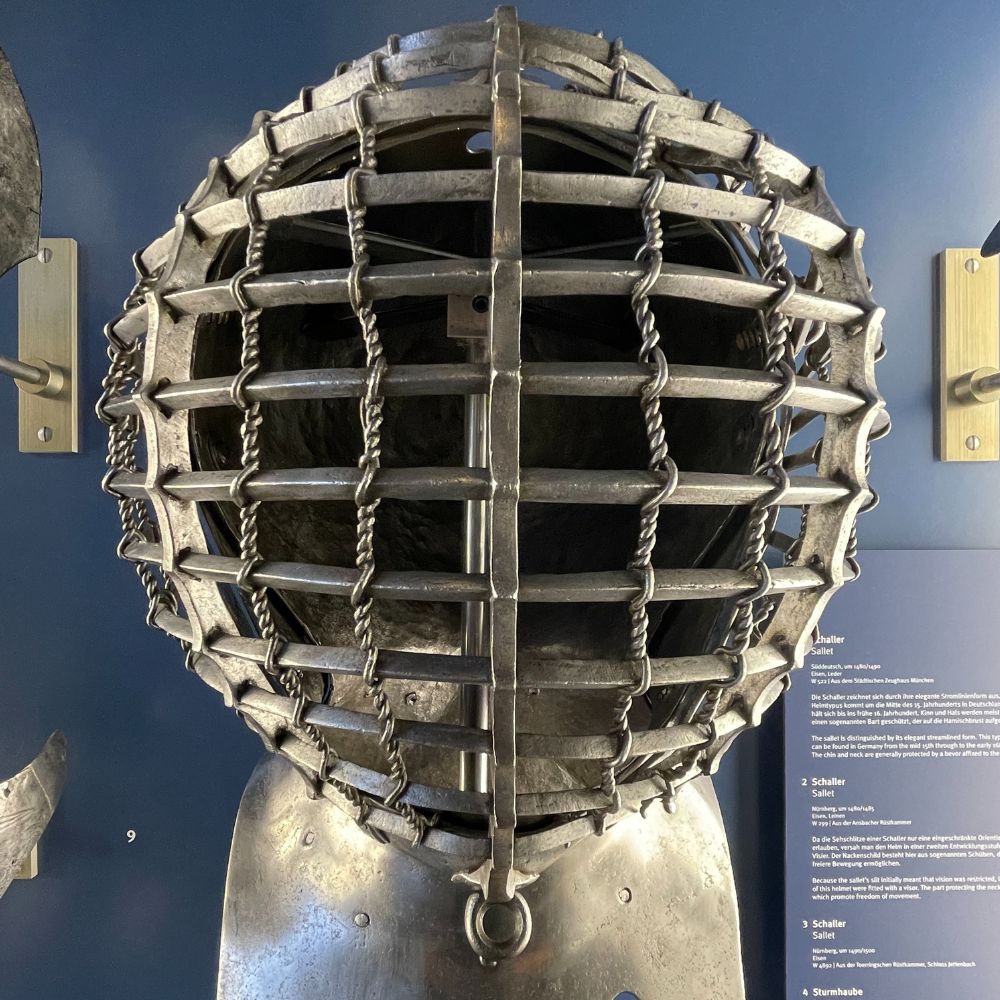
Helm of the Joust of Peace – taken in the Bavarian National Museum in Munich
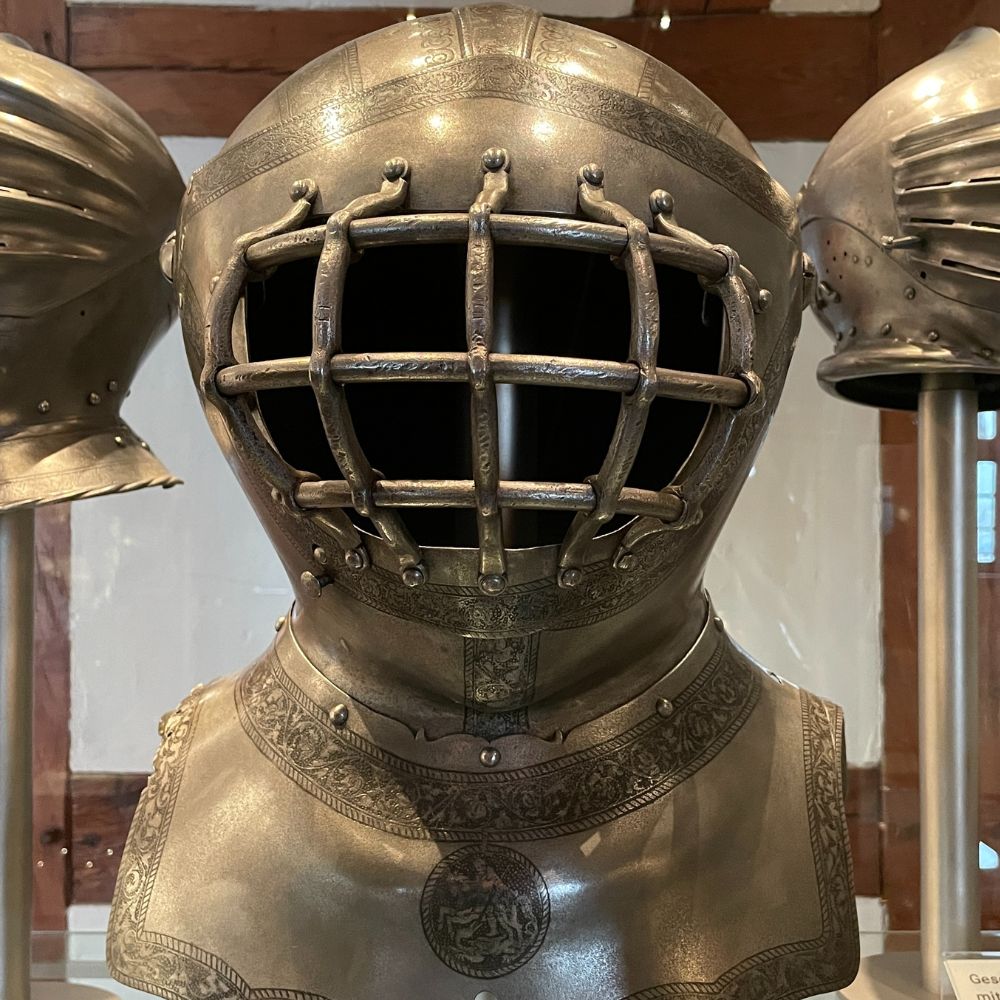
Helm of the Joust of Peace – taken in the Kaiserberg Museum in Nuremberg
< BACK